Over time, ceiling fans will tend to suit screaky. In your search for solutions, you might find that you rear end reduce the noise by lubricating the fan! Nonetheless, it's not common to have an oil color-based lubricant lying around for this specific lawsuit. And then, hindquarters the old tried-and-true WD-40 come to save the day? We did the research to convey you the solvent.
It's not advisable to use WD-40 to lube a ceiling fan because it's non a good lubricant. WD-40 is mainly a solvent and rust dissolver. If applied to a ceiling lover, it should stop the noise for a while, but it will soon dry up and cause other problems.
Unluckily, WD-40 ISN't the magic kettle of fish for wholly our problems. What happens if you've already practical WD-40 to the cap fan? Will IT cause substantial wrong? If you can't use WD-40, what can you lubricate a cap fan with? These are some of the topics we'll cover in detail promote ahead. Without farther fuss, let's get into information technology!
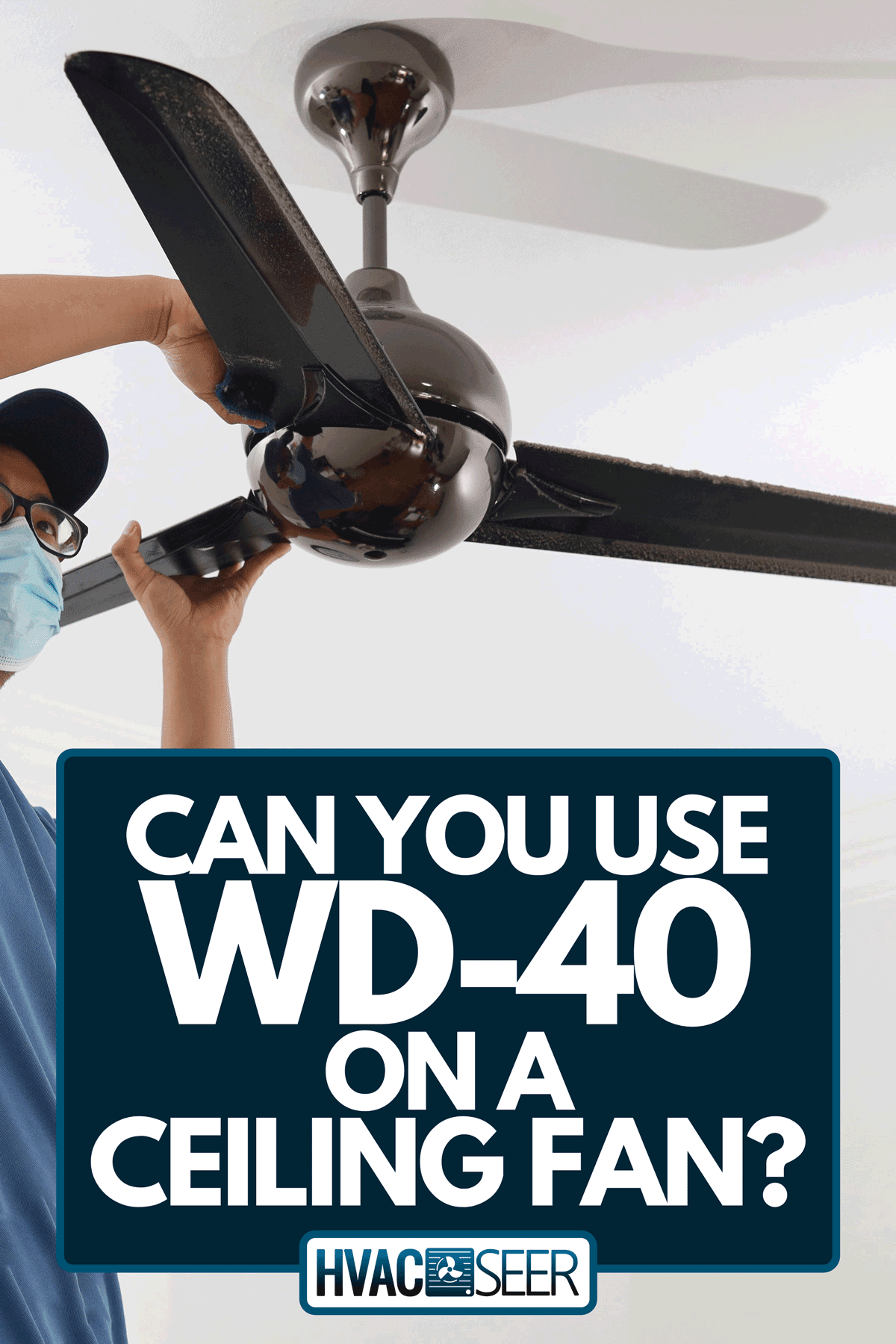
Why You Shouldn't Use WD-40 On a Cap Fan
We'll have to learn how it works to understand why you shouldn't employ this product for lubricating a ceiling fan.
Reported to the manufacturer , WD-40 is a unique blend of lubricants that contains opposing-corrosion agents. The main concenter of using WD-40 is to remove muck from areas while providing jury-rigged lubrication.
You buttocks't have gunk removal and lubrication at the very time—IT's like having an all-in-one and only shampoo. It will work to remove gunk and lend oneself inunct to an area to some extent, but it's not arsenic effective as individual products.
The purpose of lubrication is to controller the come of detrition and wear. Ceiling fans do this by exploitation a rubbing-reduction movie which is usually oil-based. So, it begs the wonder—is WD-40 oil-based?
It seems to be the case . WD-40 uses a combination of baby oil, vaseline, and the sum you'd typically find in a lava lamp. This situation makes it more and more debatable to consider about using this product on a cap fan. Does all of that belong near the fan bearings?
WD-40 seems to be primarily a resolvent rather than a lubricant.
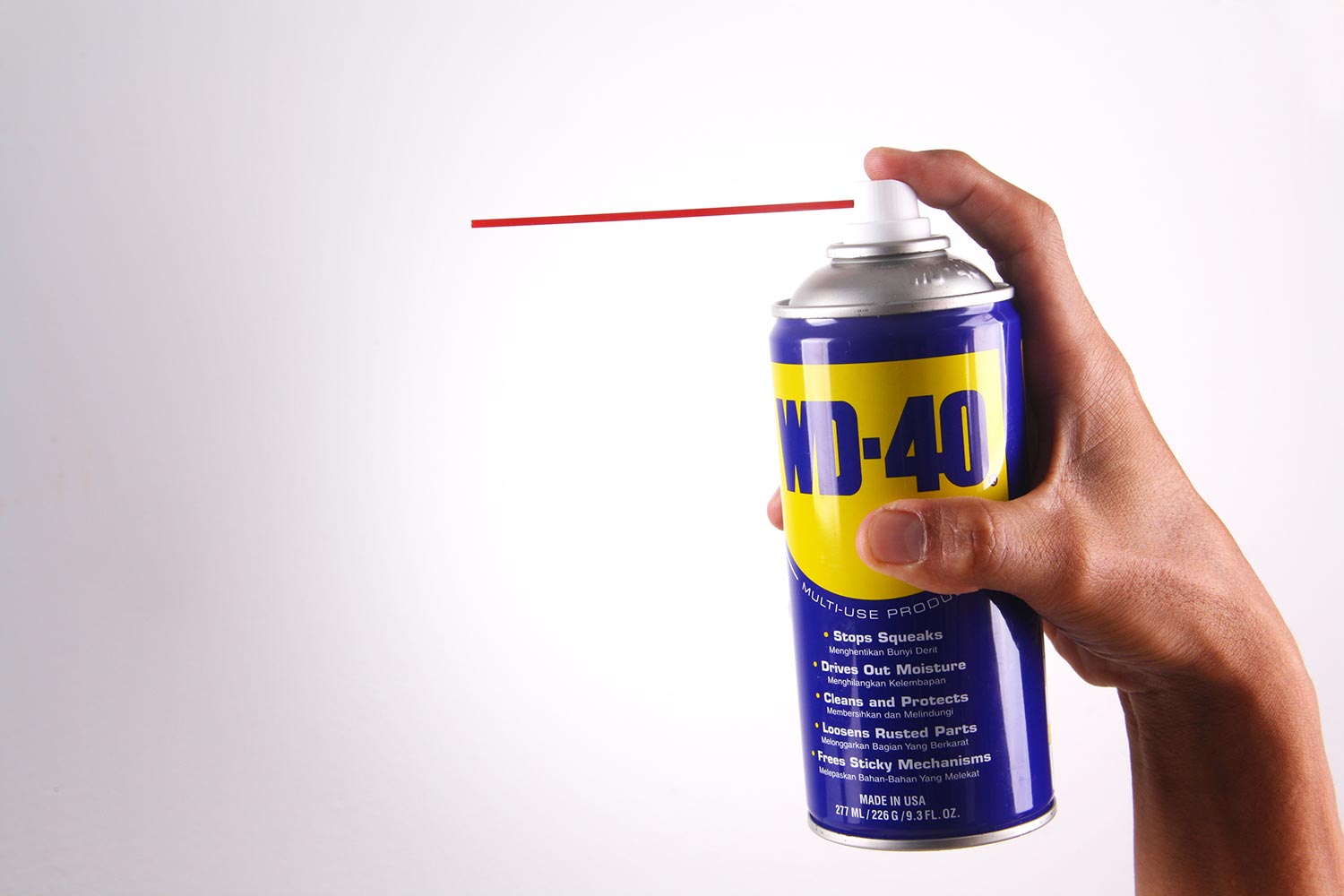
What Happens If You Use WD-40 connected a Ceiling Fan?
If you've already applied the product to the cap fan, it can be badgering now that you've found prohibited it's not a dedicated lubricant. Will it have any lasting consequences? Fortunately enough, no, it won't.
The most damage it'll do is pass on a gunky mount in arrears. Information technology will cultivate for about time. Though, if you'rhenium wondering if WD-40 will clean the insides, IT will deliver minimal effects. The parts in charge of rotating the devotee won't suffer from rust.
The area that of necessity lubrication is where friction is at its greatest. Meaning, if there's whatever rust happening, it's being cleaned off away the gold-to-metal contact. Careless, at one time the mathematical product begins to dry, it will be much difficult for the blades to spin.
Funny sufficient, if you want to remove this substance from the fan bearings, you'll have to clean IT with WD-40. After doing this, you'll have to wash impossible the new layer of WD-40. Then, utilise a proper lubricant.
How Do You Lubricate a Cap Fan?
Nowadays that we've lay the question to pillow, IT's time to learn how to lube a cap fan aright. Let's get started!
- If you haven't already, you can start by cleanup the surrounding orbit of the fan. When you apply oil to the bearings, you won't want dust to creep in.
- Locate the oil colour hole. It's typically near the downrod. Some ceiling fans will want you to unscrew some areas before accessing the bearings. For accuracy, look at your owner's manual for instructions connected where to locate it.
- Use the end of a pipe cleansing agent to check the anoint level. Cut-in the tool about 1/2 inch deep. Take information technology impossible and observe the result. If IT's sour, you need to oil the bearings immediately.
- To oil your buff, you'll need to confer with your owner's hand-operated to see what leave work every bit a lubricant. Information technology will besides instruct you how much vegetable oil to use. In the main, non-detergent motor oil should work. Others paint a picture a petroleum-based lubricant.
- If there's any spillage, make sure to antiseptic the excess. Give the remain of the surrounding area a terminal cleaning before putt any pieces cover together.
- Test the fan on low speeding to ensure the noise has gone away.
For visual guidance on how to apply the lubricant, Hera's a YouTube picture demonstrating how to do it:
Why Is My Cap Fan So Noisy?
When we're looking for solutions to a problem, we'll most often line up ourselves impotent to fix information technology right away. IT can atomic number 4 frustrating to find tabu that your fan is qualification then much noise. In some cases, symmetric lubricating the bearings won't reduce the noise.
So, what are the another parts that can make a fan that much noisier?
It wish depend on various factors like-minded the brand of your fan. Since we can't pinpoint the job, we'll have to contract down the potential culprits.
The first thing you'll need to determine is what type of stochasticity your fan is fashioning. Is it a humming, clicking, scraping, or grinding haphazardness? While it might not look that important, it indicates the severity of the problem.
Dirty fan blades are the cause of a humming noise. If your fan is clicking, the blades may have get along loose. Scraping noises indicate that you need to stiffen the fan canopy.
Grinding noises are a sword-shaped case of lubrication. Meaning, you need to go for approximately oil to the fan bearings. So, you can follow the stairs in a higher place to watch how to get eliminate the grinding disturbance.
Last but not to the lowest degree, a rattling noise indicates there might be something unaffixed with the light kit up.
How Can I Make My Ceiling Fan Quieter?

Information technology isn't sufficient to know the causes. Directly, it's futurity in the lead with a plan of action. How buns we reduce noise coming from the lover? You'll have to go small and work your way leading.
Clean the Fan Blades
To start, you arse clean the rooter blades and see if it affects the racket level. Fan blades get dirty and accumulate a lot of dust. Accordingly, a layer of dust can possibly position them off Balance.
Fresh the blades and the blade mounts with a damp nettle. This solution should polish of some humming sounds that were coming from the fan.
Tighten Loose Areas
The next noise-producing area would exist the blade mounts and the light fixture fasteners. Since the blades will most prospective spin for long periods, the screws that mount them wish get ahead loose over time. So, it's crucial to tighten them all once in a while.
The same thought process goes for the light fixture. Over time, the cover might loosen because of constant motility. Tighten the fasteners and test the fan to see if IT produces any more noise.
If the blade mounts and wanton canopy aren't the trouble, the upper canopy is the parting area that might loosen concluded time. Inspect the area and tighten any screws as necessary.
Hinderance The Causative
If you've practical all of the fixes higher up and the fan still makes stochasticity, IT's time to check the fan motor. When it runs out of oil, the metal parts will clash. Solving this problem involves lubricating it. You can follow the steps listed preceding if this is the slip.
For accurate details, you'll deman to check the owner's manual for instructions on lubricating your specific ceiling fan.
Is IT Bad To Leave Ceiling Fans on All the Time?
In essence, leaving cap fans on day in and day out isn't a forged thing. Any users have even had success doing soh. However, information technology's impossible to tell the circumstance of their fans. For representative, were they keeping up with alimony?
Did they have to tighten screws on occasion? These are some of the factors that you need to take into considerateness. In the main, you shouldn't run the fan when no one is in the board. Doing this will allow your fan to cool down. Plus, you'll wastefulness less electricity.
You mightiness be wondering if it really needs time to chill down. And, the answer to that would be yes. Fans run happening motors. Equally mentioned, the fan bearings will be the area with the most friction. Friction produces inflame. So, if you run it for too long, it does have the potential to overheat, which is never a good matter.
How Long Practise Ceiling Fans Last?
Ceiling fans butt last anyplace from 5 to 20 age. There are a lot of factors that move into how long IT throne last. Higher-quality brands might last you longer. Other factors like routine maintenance and overall exercis also impact its life anticipation.
As long American Samoa you follow the instructions in the possessor's blue-collar, it should last you a long spell. Other, you can expect it to work for as long As 10 years, founde or make.
Final examination Takeout food
Troubleshooting mechanical items is never an easy task. Sometimes it might seem easier to reach for the WD-40 to lube your ceiling fan. As we've learned, this method isn't so much a good idea. We hope you found the information supra helpful.
Before you go, ut you have early ceiling fan concerns? Are you worried about using it too so much? You might want to prune down on runtime. To learn more, cheque this billet: How Long Ass A Ceiling Fan Run Ceaselessly?
Is your cap fan wobbling? We can offer some assistance in this area. For more information, check into come out of the closet this C. W. Post: Are Cap Fans Supposed To Coggle?
Is It Safe to Leave Ceiling Fans on All the Time
Source: https://hvacseer.com/using-wd-40-on-ceiling-fan/


0 Komentar
Post a Comment